5761 SE Federal Hwy, Stuart, FL 34997
Can Emergency Dentistry Preserve a Displaced Tooth?

Have you ever found yourself in a situation where you or a loved one experiences a traumatic injury, and a tooth is knocked out or displaced? The panic that follows is natural, but there’s no time to waste! When a tooth is displaced, it’s crucial to act quickly. The sooner you seek emergency care, the better the chances of saving the tooth.
In the world of dentistry, time truly is of the essence. Emergency dental treatment can make the difference between saving and losing a tooth. By seeking the help of an emergency dentist, such as the professionals at Family Dentistry of Stuart, you can increase the odds of successfully preserving the tooth.
Don’t panic. Let’s explore how emergency dentistry works to save your smile in these stressful situations.
What is a Displaced Tooth?
A displaced tooth has been knocked out of its socket but may still be attached to the gums by the ligament. This condition usually happens as a result of accidents or sports injuries, especially if there’s an impact to the face or mouth. The tooth might appear shifted, either partially or completely out of place.
There are two main types of displacement:
- Partial Displacement (Subluxation): In this case, the tooth is loosened but not completely out of its socket. It may move slightly, causing discomfort, but remaining in place.
- Complete Displacement (Avulsion): The tooth is knocked out of its socket completely, and the root may be exposed. This is the most severe form and typically requires immediate attention to attempt reimplantation.
Both types of displacement require quick intervention from an emergency dentist in Stuart to prevent further damage to the tooth and surrounding structures. If you find yourself or a loved one in this situation, you must act immediately, keeping the displaced tooth moist and avoiding touching the root.
The Role of Emergency Dentistry in Tooth Preservation
When a tooth becomes displaced, the first few minutes matter more than you think. Immediate actions taken can significantly influence the outcome.
The first step is to keep the displaced tooth moist. If possible, place it in a glass of milk or saline solution. Never touch the tooth’s root, as this can damage the tissue necessary for successful reimplantation. The quicker you act, the higher the chance of saving the tooth.
An emergency dentist specializes in handling dental trauma and will quickly assess the situation. At Family Dentistry of Stuart, our team is trained to evaluate the extent of the injury, clean the area, and reimplant the tooth if possible.
The success rate of reimplanting a displaced tooth is highest if it is performed within the first hour. The dentist will also manage any pain and provide sedatives or local anesthesia to ensure you remain comfortable during the procedure.
How Emergency Dentistry Works for a Displaced Tooth
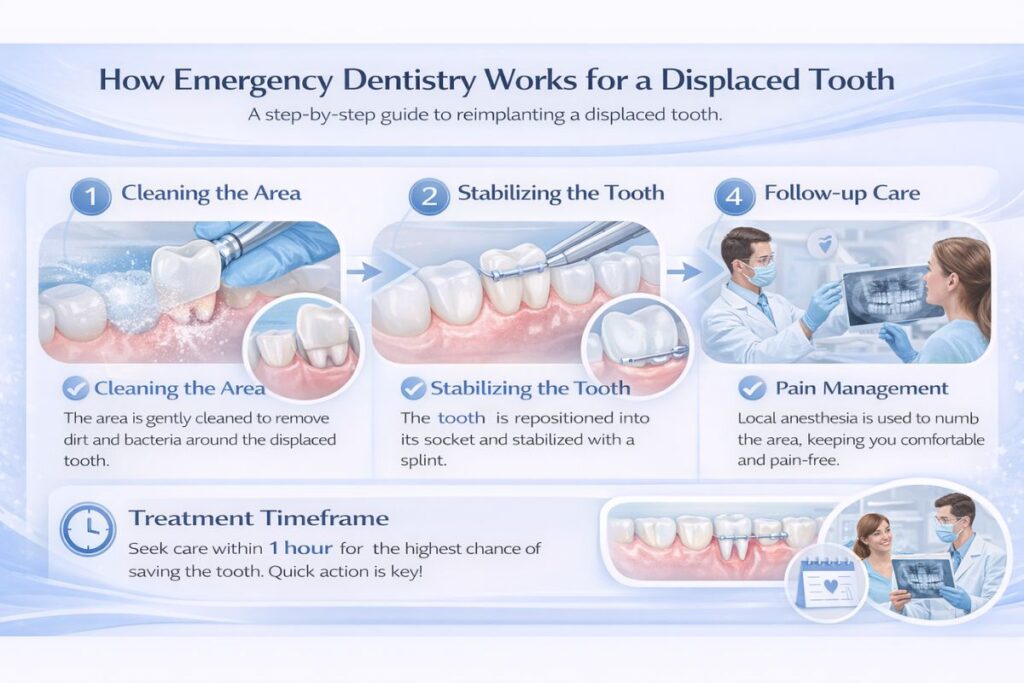
When you experience a displaced tooth, quick intervention by an emergency dentist is crucial to prevent further damage and increase the chances of saving the tooth. Here’s a look at the step-by-step process of how emergency dentistry works for reimplanting a displaced tooth.
Step 1: Cleaning the Area
The first step after arriving at the dentist’s office is to clean the area around the displaced tooth. This is done gently to remove any dirt or bacteria that might have entered the socket.
If the tooth is still in the socket but loose, the dentist will carefully examine it to avoid damaging the surrounding gums and tissues. In cases where the tooth is completely displaced, the dentist will carefully remove any debris to prevent infection and prepare for the reimplantation process.
Step 2: Stabilizing the Tooth
Once the area is cleaned, the dentist will attempt to reposition the tooth into its original socket. If the tooth is only partially displaced, this can usually be done by gently guiding it back into place. In cases where the tooth has been completely knocked out, the dentist will carefully reimplant the tooth into its socket.
Once repositioned, the tooth will be stabilized using a splint or other support mechanisms to hold it in place as it heals. This is a crucial step, as it ensures the tooth stays in position while the tissue around the tooth begins to heal and reattach.
Step 3: Pain Management
Reimplanting a displaced tooth can cause some discomfort, so pain management is an important part of the procedure. Your emergency dentist will use local anesthesia to numb the area and ensure you don’t feel any pain during the procedure.
If necessary, additional sedation options may be offered to keep you relaxed and comfortable. Pain medications may also be prescribed after the procedure to help manage discomfort as the tooth heals.
Step 4: Follow-up Care
After the tooth has been reimplanted, it’s important to follow up with your dentist for further care. The dentist will monitor the healing process to ensure the tooth reattaches to the gums.
In some cases, additional treatments such as root canal therapy may be needed to prevent infection or damage to the tooth’s nerve. Your dentist will provide instructions on how to care for the area at home, which may include avoiding certain foods or activities that could put stress on the tooth during the healing process.
Treatment Timeframe
The sooner you seek treatment, the better the chances of saving the displaced tooth. Ideally, you should reach an emergency dentist within an hour of the injury. The likelihood of successful reimplantation significantly decreases after this time. If the tooth isn’t reimplanted promptly, the chances of saving it drop dramatically, and more invasive procedures like dental implants may become necessary.
Acting quickly and seeking emergency care from a qualified dentist like the team at Family Dentistry of Stuart can make all the difference in preserving your tooth and restoring your smile.
Factors That Affect the Outcome of a Displaced Tooth
The success of saving a displaced tooth depends on several factors:
1. Timing
The sooner you seek treatment, the better. Ideally, treatment should occur within the first 30 minutes to an hour. After this, the chances of successful reimplantation significantly decrease.
2. Age and Health of the Tooth
Younger teeth and teeth with healthy, strong roots have a better chance of survival. Older teeth or those with weakened roots may have a more difficult time reattaching.
3. Type of Injury
The severity of the injury also affects the outcome. A tooth that is simply loosened might have a better chance of being preserved than one that has been completely displaced or broken.
At Family Dentistry of Stuart, our qualified team understands the various factors that can influence the outcome of a displaced tooth. We use advanced technology and treatment methods to give you the best chance of preserving your natural tooth whenever possible.
Prevention Tips to Avoid Tooth Displacement
While accidents can happen at any time, there are several ways to reduce the likelihood of tooth displacement:
1. Wear a Mouthguard
If you or your child plays contact sports, a mouthguard is essential. This protective gear absorbs shocks and prevents teeth from being displaced or damaged.
2. Practice Safety Measures
Taking precautions to prevent falls or accidents can also help avoid dental injuries. For example, being cautious while riding bicycles, skateboarding, or participating in high-risk activities can reduce the risk of displacement.
3. Regular Dental Checkups
Routine visits to your emergency dentist in Stuart can identify early signs of weak or damaged teeth. Regular care ensures that any potential issues are addressed before they lead to more serious problems, such as tooth displacement.
At Family Dentistry of Stuart, we recommend scheduling bi-annual check-ups for the entire family to monitor oral health and reduce the risk of accidents.
A displaced tooth can be alarming, but with quick action and expert care, it’s possible to save it. Emergency dentistry plays a crucial role in preserving your smile, ensuring that your tooth has the best chance of reattaching to the gums.
Remember, if you or a loved one experiences a displaced tooth, don’t panic. Seek help immediately from an emergency dentist. At Family Dentistry of Stuart, we are here to provide the care you need when you need it most.
FAQs
How soon should I see a dentist after a tooth displacement?
You should see an emergency dentist within an hour for the best chance of saving the tooth.
How long does it take for a displaced tooth to heal?
It typically takes a few weeks for the tooth to fully heal and reattach to the gums.
Can a displaced tooth survive after several hours?
The chances decrease significantly after an hour, but early intervention can still help preserve the tooth.
Can a displaced tooth be saved if it’s broken?
If the tooth is fractured, it might not be reimplanted, but other dental treatments like implants may be options.
How long will it take for the tooth to stabilize after reimplantation?
The tooth usually stabilizes within a few weeks, though the healing time may vary depending on the severity of the injury.